Silver's Ascent: Industrial Demand Fuels a Bullish Outlook
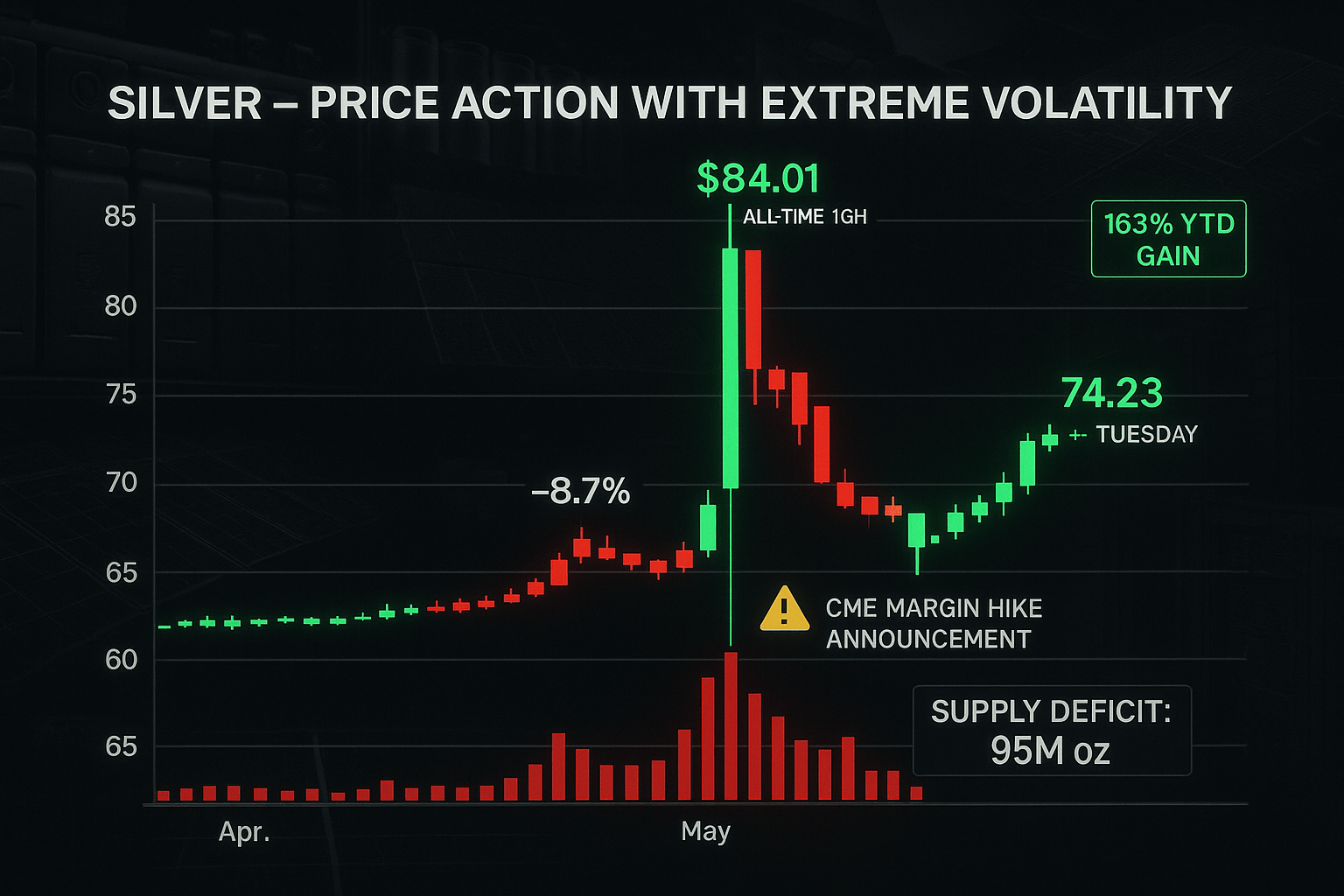
Silver is no longer merely gold's overlooked counterpart; it has emerged as a standout performer in the precious metals complex. Following a staggering 140% gain in 2025 and prices surging past $72 per ounce, silver has dramatically outperformed virtually every major asset class. As we enter 2026, a confluence of unprecedented industrial demand, persistent supply constraints, and resurgent investment enthusiasm is positioning silver for potentially unprecedented heights. Some aggressive forecasts even suggest the white metal could reach $100 or even $200 per ounce.
The Great Silver Breakout of 2025
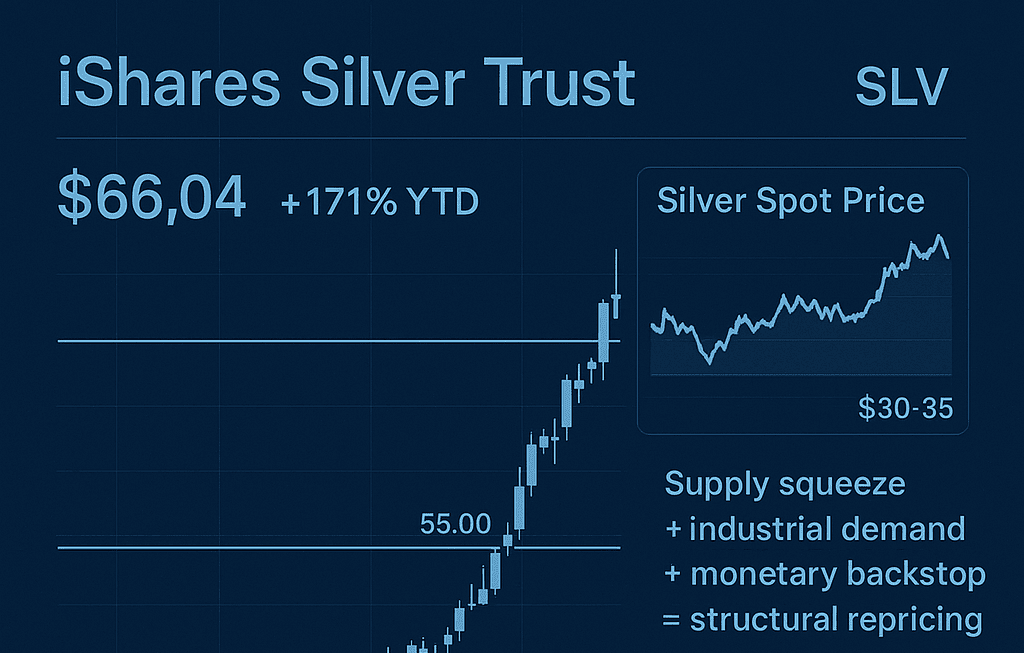
Silver's performance in 2025 was nothing short of spectacular. The white metal not only outpaced gold's impressive 70% rise but also delivered gains that dwarfed traditional equity benchmarks. More significantly, silver decisively broke through the formidable $50-$54 resistance zone that had capped prices for over 13 years. This move has ushered silver into what analysts term "price discovery territory" – a crucial technical setup not seen in over a decade.
This breakout carries profound implications. For years, silver traded in the shadow of its 2011 highs, unable to sustain rallies above $50 despite favorable underlying fundamentals. The decisive breach of this long-standing ceiling in late 2025 signals a fundamental regime change in the silver market, driven by powerful forces that are only beginning to accelerate.
Industrial Megatrends: Reshaping Silver's Demand Profile
Unlike gold, which primarily serves as a monetary asset and store of value, silver's narrative is increasingly dominated by its diverse industrial applications. In 2025, industrial demand accounted for a substantial 59% of total silver consumption, a share projected to grow significantly in 2026 and beyond. Three massive industrial megatrends are converging to create unprecedented demand for silver.
Solar Energy: The Dominant Force
Solar photovoltaic (PV) technology has emerged as the single largest driver of industrial silver demand. According to the 2025 World Silver Survey, solar panels are projected to consume over 230 million ounces of silver annually by 2026. Each solar panel requires 15-25 grams of silver for the conductive paste essential for electrical current flow. With global solar installations growing at a compound annual rate of 15-20%, the appetite for silver in this sector is insatiable.
The mathematics are sobering. Research from the University of New South Wales indicates that solar manufacturers will likely require over 20% of current annual silver supply by 2027. By 2050, projections suggest solar panel production could consume 85-98% of current global silver reserves. This is not a cyclical trend; it represents a structural transformation of the global energy system with decades left to run.
Government commitments to net-zero emissions are accelerating this trend. The European Union aims for 700 gigawatts of solar capacity by 2030, while China continues to dominate global solar installations. Even potential shifts in U.S. solar subsidies are unlikely to derail the global momentum, as aggressive targets elsewhere will offset any localized slowdown.
The supply-demand dynamics are particularly acute because silver production is highly inelastic. Over 70% of global silver output comes as a byproduct of base metal mining, meaning producers cannot easily ramp up supply in response to price increases. Declining ore grades and permitting delays in key producing regions like Mexico and Peru further constrain the ability to meet surging solar-driven demand.
Electronics and 5G: The Invisible Engine
Beyond solar energy, the electronics sector consumes approximately 240 million ounces of silver annually, with projected growth rates of 8-12% through 2026. This expansion is fueled by the proliferation of high-performance devices, from smartphones to advanced semiconductors, all relying on silver's unmatched electrical conductivity and thermal properties.
A critical, yet often overlooked, driver is the rise of artificial intelligence (AI) data centers. These facilities require silver-plated copper connectors to minimize resistance and prevent overheating in power delivery systems. Analysts estimate that if just 10% of new global data centers adopt silver-enhanced components, industrial demand could rise by 5-10% over the next decade. With global electricity demand from data centers and AI expected to double by 2026, the electronics sector is positioned to become an increasingly dominant force in silver consumption.
The global rollout of 5G networks adds another layer of demand. In 2025, the hardware segment of the 5G infrastructure market accounted for 52.4% of total revenue, driven by components like base stations and massive MIMO systems that rely on silver for high-frequency signal transmission. Advanced technologies such as beamforming and network slicing further amplify silver's importance in ensuring low-latency, high-capacity connectivity.
Electric Vehicles: The Accelerating Catalyst
The electric vehicle (EV) revolution is creating substantial new demand for silver. Battery-electric vehicles require approximately 25-50 grams of silver each – 67-79% more than internal combustion vehicles. Silver is critical for battery management systems, power electronics, charging infrastructure, and various electrical contacts.
The Silver Institute forecasts that global automotive silver demand will increase at a compound annual growth rate of 3.4% between 2025 and 2031. More significantly, EVs are projected to overtake internal combustion engines as the primary source of automotive silver demand by 2027, accounting for 59% of the market by 2031. The parallel expansion of charging infrastructure creates additional demand, as electrifying transportation requires massive investments in power distribution systems that depend heavily on silver's conductive properties.
Deepening Supply Deficit: A Structural Imbalance
While demand surges across multiple fronts, global silver supply is consistently failing to keep pace. Global demand "massively exceeded" supply in 2024, marking the fifth consecutive year of structural deficits. The shortfall in 2025 is estimated at approximately 117 million ounces, and this gap is widely expected to widen further in 2026.
The supply-side challenges are multifaceted. Primary silver mining represents less than 30% of total production, with the majority coming as a byproduct of copper, lead, and zinc mining. This means silver supply is largely driven by demand for base metals rather than by silver prices themselves. Even with silver approaching $75 per ounce, miners cannot simply "flip a switch" and produce more.
Environmental regulations, declining ore grades, and lengthy permitting processes further constrain supply growth. New mining projects require years of development, and many high-grade silver deposits have already been exploited. The inelasticity of supply, combined with explosive demand growth, creates a fundamental imbalance that can only be resolved through significantly higher prices.
Silver Price Targets: From Conservative to Ambitious
Wall Street's 2026 silver forecasts reflect this bullish fundamental backdrop, though estimates vary considerably:
- Bank of America projects silver will average $56.25 per ounce in 2026, with potential peaks around $65.
- UBS has set a mid-term target of $55 by mid-2026, with potential upside to $44-47 in the near term.
- ING expects silver to average $55 per ounce in 2026, though the firm acknowledges that volatility will remain elevated.
- Citi takes a more conservative view, forecasting a retreat to around $42 per ounce as some speculative excess is wrung out of the market.
However, more aggressive forecasts are capturing significant attention. InvestingHaven projects silver could reach $77-82 per ounce by 2030, while LiteFinance suggests aggressive scenarios of $133-143 per ounce, with potential for $200 or higher. Robert Kiyosaki, the "Rich Dad Poor Dad" author, has made waves by predicting silver could hit $200 by 2026, citing hyperinflation risks and weakening fiat currencies.
Technical analysts point to silver entering price discovery mode above $65, with limited resistance between current levels and $72, followed by technical targets at $88. Some models stretch even further, toward the psychologically significant $100 level – a milestone that would represent a fundamental revaluation of silver's industrial importance.
The Strengthening Investment Case for Silver
Silver's dual nature as both an indispensable industrial commodity and a traditional monetary asset creates a unique investment proposition. Unlike purely industrial metals, silver benefits from safe-haven flows during periods of financial stress. Unlike gold, it offers leveraged exposure to the green energy transition and technological advancement, making it a compelling choice for growth-oriented investors.
Retail and institutional investors are taking notice. While gold ETF inflows surged in 2025, silver ETF demand is also building as investors seek exposure to the metal's potent growth story. Over 50% of retail traders predict silver will be the top-performing metal again in 2026, according to recent surveys.
The relative value proposition versus gold remains compelling. With the gold-to-silver ratio still elevated by historical standards, silver offers attractive value for investors who believe the ratio will compress toward its long-term average. If silver is indeed entering a sustained bull market driven by structural demand, the potential for ratio compression could amplify returns significantly.
Potential Headwinds and Volatility
While the outlook for silver appears robust, investors must be aware of potential challenges and the metal's inherent volatility.
The Substitution Challenge
One potential headwind for silver bulls is the risk of technological substitution. As prices rise, manufacturers have strong incentives to reduce silver content or develop alternative materials. Some solar panel technologies have indeed reduced the amount of silver required per cell through innovations in paste formulation and cell design.
However, the Silver Institute notes that silver's superior electrical and thermal conductivity properties make substitution extremely difficult without significant performance degradation. Every attempt to replace silver in critical applications has either failed or resulted in inferior products. In high-performance applications like AI data centers, 5G infrastructure, and premium solar panels, there is simply no adequate substitute that matches silver's efficiency.
Moreover, even as silver content per unit decreases through efficiency gains, total unit volumes are growing so rapidly that aggregate silver demand continues to rise. A 10% reduction in silver content per solar panel is often overwhelmed by 20% annual growth in panel installations.
Volatility: The Double-Edged Sword
Silver is often called "gold on steroids" because of its heightened volatility. The metal tends to move in much larger percentage terms than gold, making it attractive for traders seeking amplified returns but challenging for conservative investors. This volatility stems from silver's smaller market size and its dual demand profile spanning both industrial and investment applications.
In a bull market, silver can dramatically outperform gold as industrial demand and investment flows reinforce each other. However, in a downturn, silver typically falls harder than gold as industrial demand weakens and leveraged speculators exit positions. Investors considering silver exposure in 2026 should be prepared for significant price swings even if the overall trend remains upward.
The primary risk to the bullish outlook comes from the industrial side. A sharper-than-expected global economic slowdown, particularly in manufacturing or construction, could temporarily dampen demand. Higher prices sustained for too long might eventually trigger demand destruction in price-sensitive applications.
Macroeconomic Influences: Rates, Inflation, and the Dollar
Silver's 2026 outlook is also shaped by broader macroeconomic conditions. Federal Reserve policy remains a key variable. The central bank cut interest rates three times in late 2025 before signaling a pause, and markets expect further easing in 2026 as the labor market softens. Lower real interest rates historically benefit silver by reducing the opportunity cost of holding non-yielding assets and by supporting industrial activity.
Inflation expectations play a dual role. Moderate inflation supports industrial demand by encouraging capital investment in infrastructure and clean energy. However, if inflation accelerates beyond central bank comfort zones, forcing aggressive monetary tightening, both industrial and investment demand could suffer.
The U.S. dollar's trajectory also matters significantly. A weaker dollar makes silver more attractive to international buyers and supports commodity prices broadly. Conversely, dollar strength could create headwinds, though silver's robust industrial demand profile provides some insulation from purely currency-driven moves.
Strategic Positioning for Silver Exposure in 2026
For investors seeking silver exposure, several approaches merit consideration based on risk tolerance and investment objectives:
- Physical Silver: Coins, bars, and rounds offer direct ownership and maximum control, though storage and insurance considerations apply. Physical silver provides psychological comfort and serves as a hedge against financial system risks, but liquidity can be lower than paper alternatives.
- Silver ETFs: Exchange-traded funds (ETFs) provide convenient exposure with daily liquidity and transparent pricing. These vehicles are suitable for most investors seeking straightforward silver allocation without the complexities of physical ownership.
- Silver Mining Stocks: Shares of silver producers offer leveraged exposure to silver prices, as mining companies benefit from operational leverage. However, these investments carry company-specific risks and are more volatile than the underlying metal. Silver-focused mutual funds provide diversified exposure to the mining sector with professional management.
- Silver Futures and Options: Sophisticated investors may use derivatives for hedging or speculation, but these instruments require expertise and carry significant risks, including leverage and potential for total loss.
Most advisors recommend viewing silver as a portfolio diversifier rather than a core holding. Allocations of 3-7% of total portfolio value provide meaningful exposure without excessive concentration risk. As Joshua Glawson of Money Metals Exchange advises, "My prediction, although I cannot tell the future, is that the price of silver is going to continue to rise in 2026."
Conclusion: Silver's Indispensable Role in a New Era
As 2026 approaches, silver stands at the intersection of powerful long-term trends that are only beginning to accelerate. The solar energy revolution, the AI and 5G buildout, the electric vehicle transition, and the broader electrification of the global economy are creating structural demand that will persist for decades. Supply, constrained by geological realities and byproduct economics, cannot easily respond.
The breakout above multi-year resistance levels suggests that silver has entered a new phase, with price discovery pointing toward significantly higher levels. While near-term volatility is inevitable and corrections should be expected, the fundamental case for silver has rarely been stronger.
Whether Robert Kiyosaki's $200 target proves prescient or overly ambitious will depend on how macroeconomic and geopolitical conditions evolve. What seems increasingly clear is that silver is transitioning from a niche precious metal to an indispensable industrial commodity at the heart of humanity's technological and environmental transformation.
For investors willing to embrace volatility in pursuit of potentially outsized returns, silver's 2026 opportunity may prove to be one of the most compelling in the commodity complex. The white metal's time in the spotlight has truly arrived.
Disclaimer: This article is for informational purposes only and does not constitute investment advice. Silver prices are highly volatile and past performance does not guarantee future results. Investors should consult with financial advisors before making investment decisions.