Silver's Dramatic Rebound: After the Margin Squeeze
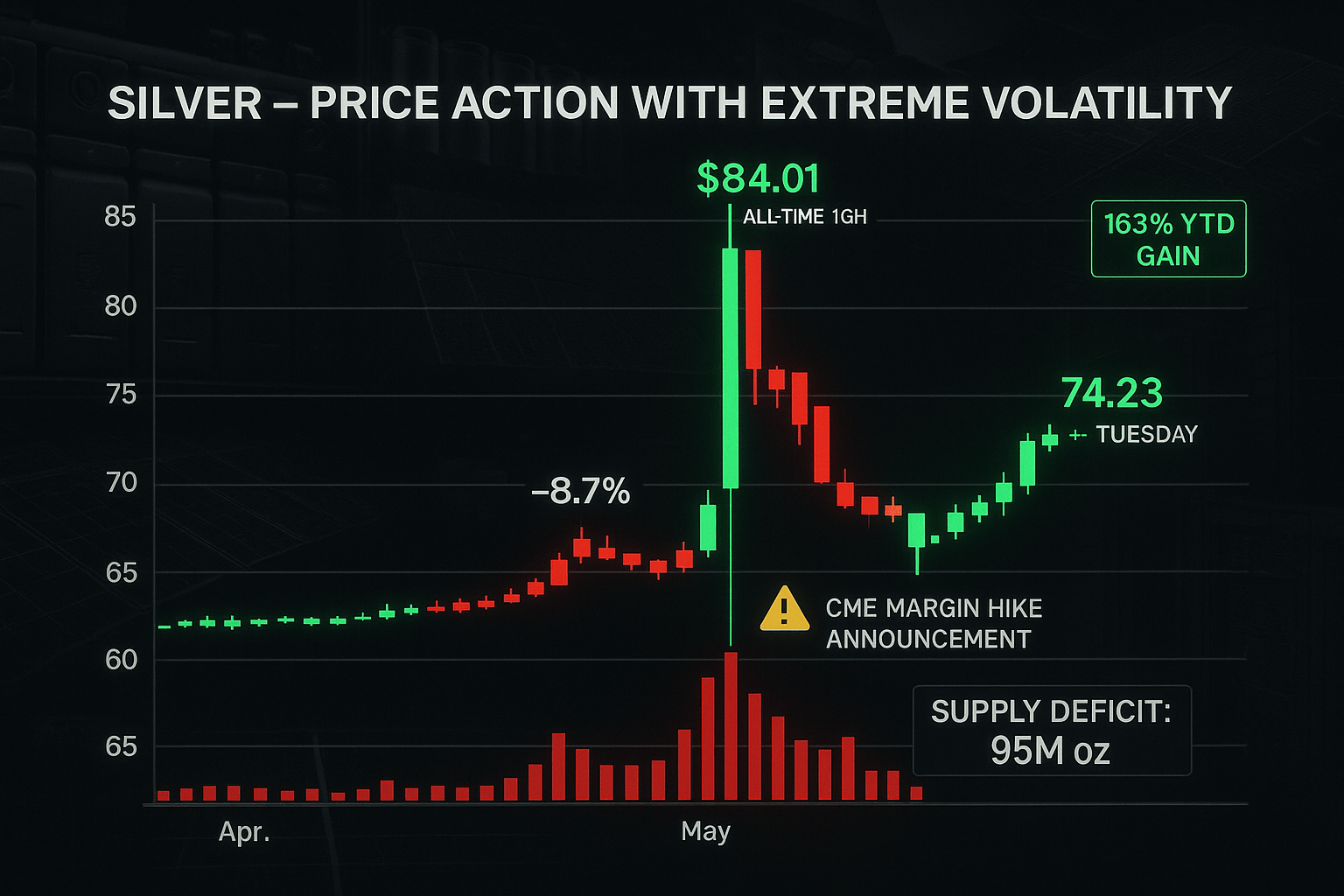
Silver futures staged a remarkable comeback on Tuesday, surging 7-8% to reach $74.23 per ounce. This rebound follows Monday's catastrophic 8.7% crash, the metal's steepest single-day decline since February 2021. The volatile trading saw silver briefly touch an all-time high of $84.01 early Monday before collapsing to $70 in thin, holiday-period trading. The Wall Street Journal reports that a crucial decision by CME Group to raise margin requirements on precious metals contracts triggered a cascade of forced liquidations, unwinding speculative positions built during silver's historic 163% year-to-date rally.
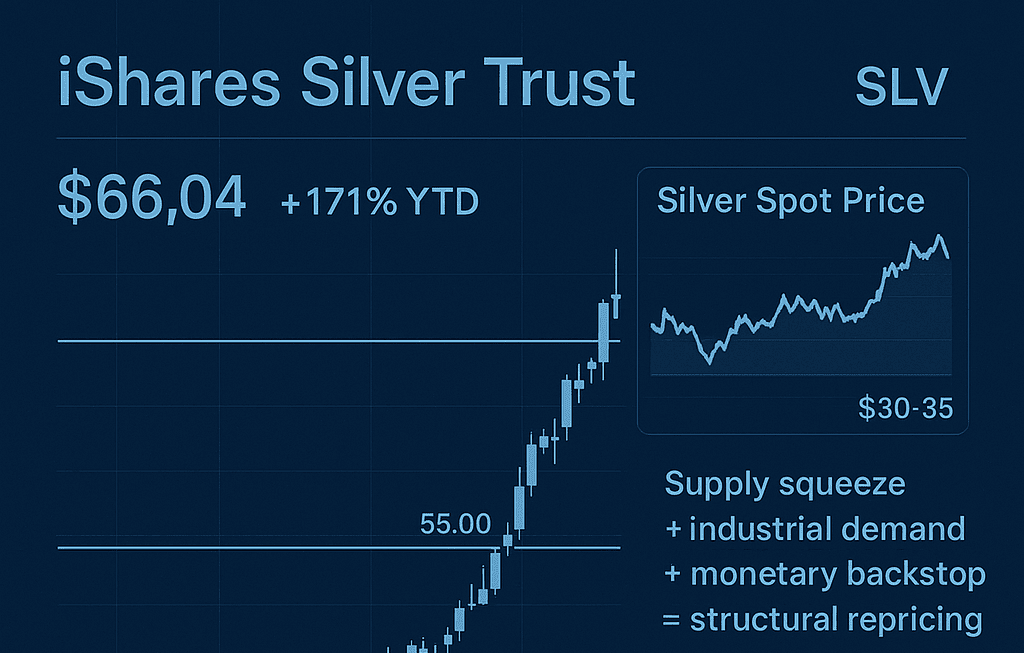
Amidst structural supply deficits, impending Chinese export restrictions, and accelerating industrial demand from AI, traders are now grappling with a critical question: Was Monday's plunge a cycle top, or merely a significant shakeout before silver continues its ascent towards $100?
Data verified as of: Tuesday, December 30, 2025, 5:41 PM CET
The Margin Squeeze: Unpacking the Metals Market Volatility
CME's Margin Hike: A Catalyst for Liquidation
According to reports from The Wall Street Journal and CNBC, CME Group announced on Friday—with immediate effect on Monday—an increase in initial margin requirements for silver, gold, platinum, and palladium futures. This move was a direct response to “recent volatility” in the markets. The consequence was immediate and severe: highly leveraged traders were compelled to either inject substantial additional capital or liquidate their positions.
In the illiquid, post-Christmas trading environment, this directive initiated a self-reinforcing spiral. Margin calls triggered forced selling, which in turn drove prices lower, leading to further margin calls. This mechanical unwinding resulted in silver's 8.7% plunge, its largest one-day dollar decline since 1980. Platinum also dropped a significant 15%, with palladium crashing in sympathy.
Kyle Rodda of Capital.com observed, “The fundamental narrative for precious metals remains strong, particularly for silver, which benefits from a deepening supply deficit along with expectations of looser monetary policies ahead, exacerbated by China's planned export restrictions.” This isn't the first time CME margin hikes have disrupted the silver market; a similar move in February 2021 cooled speculative fervor linked to the WallStreetBets Reddit forum, sending silver down 8.6% in a single session. The key difference, however, is that 2021 was a retail-driven frenzy, whereas 2025 sees structural scarcity meeting speculative enthusiasm.
Fundamentals Driving Silver's Long-Term Bull Case
Structural Scarcity and China's Impending Export Controls
The recent volatility comes against a backdrop of tightening supply fundamentals. Elon Musk, via X over the weekend, underscored silver's critical role, stating, “Silver is essential in numerous industrial processes,” in response to China's announcement of export controls on silver effective January 1, 2026. As the world's third-largest silver producer, China's restrictions are set to coincide with record industrial demand.
According to the Silver Institute, global silver demand reached 1.117 billion ounces in 2025 against a supply of 1.022 billion ounces. This marks the fifth consecutive year of deficit, totaling an undersupply of 95 million ounces. Motilal Oswal Financial Services highlighted, “This year's silver rally is being shaped by real metal scarcity. Physical deficits, policy-driven supply restrictions, and concentrated inventories are increasingly dictating prices, signaling a durable shift in how the silver market is priced and traded.”
London's silver vaults experienced a full-blown squeeze in October, with ETF inflows and Indian exports depleting inventories to critically low levels. While significant inflows have since replenished vaults, a substantial portion of the world's available silver remains in New York as traders await the outcome of U.S. trade probes that could introduce tariffs or additional restrictions.
The AI and Green Energy Demand Catalyst
Beyond traditional industrial uses, silver is a cornerstone in rapidly expanding sectors. Its role in electric vehicles (EVs), solar panels, semiconductors, and particularly in the burgeoning field of Artificial Intelligence (AI) data centers, is driving unprecedented demand. This secular growth in demand is a powerful long-term catalyst, suggesting that silver's elevated price trajectory is more than just cyclical speculation.
Technical Landscape and Expert Outlook
Analyzing the Price Action: Oversold Bounce or Trend Resumption?
Prior to Monday's crash, silver's Relative Strength Index (RSI) had remained above 70 for weeks, signaling overbought conditions. The correction from $84.01 to $70—a 16.7% drawdown—served as a significant technical reset. Crucially, key support levels between $70-$72 held firm, and Tuesday's robust 7-8% rebound above $74 suggests that buyers are actively defending the prevailing bull trend.
Dilin Wu of Pepperstone Group commented, “Monday's selloff was largely technical: early profit-taking on precious metals' recent spike, leveraged long positions being unwound, and tighter margin requirements adding pressure. The fundamentals haven't changed.”
Looking ahead, WisdomTree projects silver could reach $75/oz by the end of 2026, while Julius Baer sees further upside driven by Asian demand and persistent supply deficits. However, TD Securities' Daniel Ghali offered a cautionary note: “A cycle top in silver could likely pull the entire metals complex lower given it could deflate the speculative fervor from retail traders.”
Navigating the Volatility: A Trader's Perspective
Key Levels and Potential Scenarios
For traders monitoring the silver market, the zone between $70-$72 has emerged as a critical support level. A sustained hold above this range is seen by some analysts as reaffirming the bullish trend, with potential targets revisiting recent highs around $80 and potentially extending towards $90-$100 if fundamental drivers persist.
Conversely, a decisive break below $65 could signal a deeper correction, potentially targeting $55-$60. Traders would likely watch other precious metals like copper and gold for confirmation; a breakdown in these metals could indicate a broader reversal across the complex.
2026 Outlook: The Road Ahead
As China's export controls take effect on January 1, 2026, further supply tightening could lead to intensified bidding wars among industrial users. Silver's integral role in AI data centers, electric vehicles, and renewable energy infrastructure positions it as a secular growth commodity, less susceptible to short-term economic cycles.
Conclusion: Volatility as the Price of Admission
Silver's dramatic year, encompassing a 163% year-to-date gain, Monday's sharp 8.7% crash, and Tuesday's resilient 7% rebound, perfectly encapsulates the metal's dual nature: an essential industrial commodity intertwined with speculative safe-haven appeal. The underlying fundamentals—a fifth consecutive year of supply deficit, impending Chinese restrictions, and surging demand from AI and EVs—collectively justify a higher price trajectory.
However, parabolic market moves rarely unfold in a straight line. For active traders, the $70-$72 zone represents a crucial line in the sand. Should this level hold, the path to $100 silver remains distinctly in play. A decisive breach, however, could signal a more significant shift in market sentiment.
Disclaimer: This article is for informational purposes only and does not constitute financial advice. Commodity markets involve extreme volatility and significant risk, and investors should conduct their own due diligence and consult with a qualified financial professional before making any investment decisions.