Under Armour's Comeback Play: A Contrarian Bet Emerges
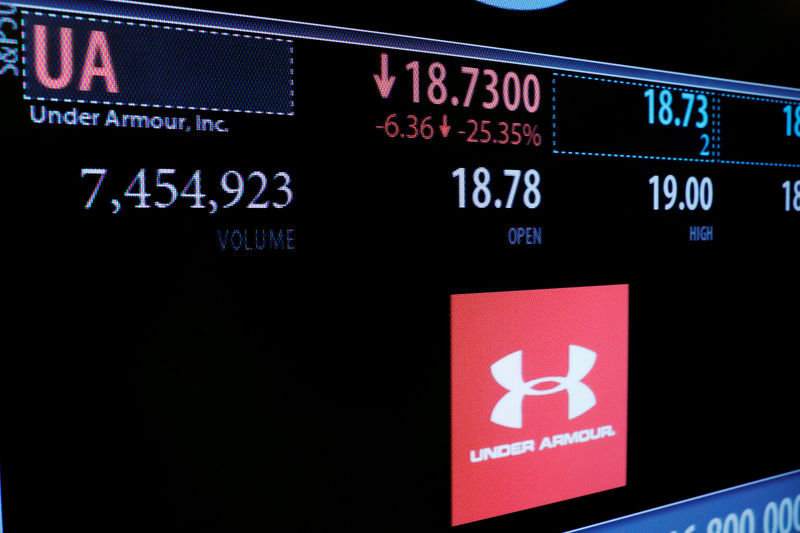
In a bold move that has sent ripples through the market, Under Armour (NYSE: UAA) recently surged 5.5% to $5.05 following the disclosure of a significant position accumulation by mega-investor Fairfax Financial. Fairfax, led by renowned value investor Prem Watsa, increased its stake to a commanding 16.1% of the company, a robust vote of confidence that directly challenges the prevailing bearish sentiment on Wall Street. The Baltimore-based athletic apparel maker, which has experienced a brutal 43.4% decline year-to-date as of late December 2025, is now squarely positioned as the ultimate contrarian play: a company exhibiting structural improvements yet trading at distressed valuations, while insiders aggressively accumulate shares.
However, with persistent negative earnings, the impending departure of signature athlete Stephen Curry in 2026, and international growth partially offset by sluggish North American performance, the critical question remains: Is this a genuine turnaround story poised for a significant re-rating, or a cleverly disguised value trap?
Prem Watsa's Conviction: Why Fairfax is Betting Big on UAA
Fairfax Financial CEO Prem Watsa, celebrated as one of Wall Street's most disciplined and successful value investors, initiated his substantial accumulation of Under Armour shares in late December 2025. His buying spree occurred at average prices ranging from $4.48 to $4.66. Fairfax's final stake of 30.45 million shares, valued at approximately $142 million at current prices, represents a 4.98% position increase, with Watsa explicitly doubling down through five separate tranches between December 22-29.
This aggressive accumulation is far from random. Watsa, known for pioneering value investing through Fairfax's 35-year history, famously avoids "catching falling knives" without deep conviction. His precisely timed entry suggests a strong belief that UAA has either bottomed or is on the cusp of doing so. This conviction appears to be underpinned by recent operational improvements that, in his view, justify a significant re-rating of the stock.
Despite a reported Q2 2025 revenue decline of 4.7% year-over-year, management noted an EPS beat of $0.01. This headline revenue miss, however, masked critical segment strength, particularly in international markets (EMEA +31%, Asia-Pacific +34%). Adding to the bullish sentiment, Guggenheim's Simeon Siegel initiated coverage with a $6 price target and a "Buy" rating on December 18, signaling that institutional analysts are also beginning to recognize UAA's severely depressed valuation. While the stock currently trades at negative earnings (-$0.21 EPS) and negative net margins (-1.74%), the broader Wall Street consensus target stands at $6.43—representing a substantial 27% upside from its current levels.
The Turnaround Narrative: Signs of Progress
Under Armour's potential turnaround hinges on several key operational pillars, demonstrating resilience and strategic execution amidst a challenging market.
International Expansion Fuels Growth
- Global revenue growth has accelerated dramatically, with EMEA surging 31% (+25% currency-neutral).
- Asia-Pacific jumped an impressive 34% (+28% currency-neutral).
- Latin America rose 7% (+12% currency-neutral).
This robust international performance represents a critical inflection point for the company. International markets now account for 26% of total revenue, a significant increase from just 12% a decade ago. This segment provides a vital source of secular growth leverage as the brand continues to penetrate underpenetrated global markets.
Stronger Product Pipeline and Direct-to-Consumer Channels
- Apparel revenue saw a healthy 10% year-over-year increase, driven by strength in training and running categories.
- Footwear revenue grew 15%, boosted by running and team sports segments.
- Direct-to-Consumer (DTC) channels expanded by 7%, now representing 35% of total revenue.
These segments are structurally high-margin, indicating a strong potential for margin recovery as overall revenue stabilizes and scales. The shift towards DTC further enhances profitability and brand control.
North American Stabilization
Perhaps one of the most encouraging signs is the stabilization of the beleaguered North American segment. This core domestic market posted 2% growth (flat currency-neutral), marking its first positive movement after years of declines. This indicates the company is successfully holding market share domestically while its international divisions multiply growth opportunities.
Navigating the Headwinds: Risks and Challenges
Despite the emerging bull case, Under Armour faces significant obstacles that could impede its recovery.
- Stephen Curry's Departure: The company's signature athlete, Stephen Curry, is set to conclude his 15-year partnership in 2026 following the release of the Curry 13 shoe. This represents a symbolic loss of brand credibility and a significant marketing challenge.
- S&P CreditWatch: S&P Global recently placed UAA on CreditWatch with negative implications, citing concerns over lease-adjusted leverage nearing 4x for fiscal 2026. This raises red flags regarding the company's financial health and debt servicing capacity.
- Persistent Unprofitability: Under Armour remains unprofitable. Q2 2025 results showed a -1.74% net margin despite the revenue beat, implying high overhead costs relative to sales. Management has guided to a modest 0.03-0.05 EPS for Q3 2026, indicating the company is still in breakeven territory. The path to sustained profitability is contingent on consistent revenue stabilization and the ability of international growth to maintain its impressive 25%+ rates.
Technicals and Valuation: An Oversold Opportunity?
From a technical perspective, UAA trades below its 200-day moving average of $5.35, typically signaling a downtrend. However, it remains above its 50-day moving average of $4.55, suggesting short-term support is holding. Notably, the stock has retested its 52-week low of $4.13 twice (in October and November 2025) without breaking through, a pattern often interpreted as a classic accumulation signal by technical analysts.
The aggressive insider buying, totaling over $70 million in a single week, while the stock sits a staggering 47% below its January 2025 high of $8.66, presents a rare alignment of price and probability that often attracts value-oriented investors.
Investment Outlook: Fairfax's Conviction vs. Market Skepticism
The investment case for Under Armour presents a compelling dichotomy. The bull case rests on accelerating international momentum, the assumption that Stephen Curry's departure is largely priced into the stock, and a clear path to margin recovery driving UAA towards the $8-$10 range by 2026. Conversely, the bear case warns of faltering North American demand, plateauing international growth, and the company's inability to achieve consistent profitability through 2026, potentially leading to further downside.
Ultimately, Prem Watsa, a seasoned investor who avoids distressed situations based purely on sentiment, has placed a formidable $70 million bet. His significant position suggests that Under Armour is a genuine recovery play, not merely a charity case. The international growth is demonstrably real, product momentum is building, and the current valuation appears absurdly cheap given the underlying operational improvements. At its current price of $5.05, many see this as a compelling 'Buy on weakness' opportunity, particularly on dips towards the $4.50-$4.80 zone, with a potential target of $6-$6.50 based on analyst consensus and technical indicators.
Disclaimer: This article is for informational purposes only and does not constitute financial advice. Investing in apparel stocks carries inherent retail and brand-specific risks.