US Stock Market Hours: Your Essential Guide for December 23-29, 2025
As the festive season peaks during the week of December 23-29, 2025, investors and traders on Global Market Pulse must navigate a U.S. stock market schedule punctuated by holiday observances. This period, encompassing Christmas Eve on Wednesday, December 24, and Christmas Day on Thursday, December 25, features modified trading hours for major U.S. stock exchanges like the New York Stock Exchange (NYSE) and Nasdaq.
Understanding these adjustments is crucial for strategic planning, managing liquidity, and avoiding unexpected market closures. This in-depth analysis provides a daily breakdown of trading hours, highlights potential impacts on investors, and offers a comparison with global markets, ensuring you remain informed through the holiday week.
Weekly Trading Schedule Overview: December 23-29, 2025
While U.S. equity markets generally maintain consistent core trading hours (9:30 a.m. to 4:00 p.m. Eastern Time (ET) on weekdays), this week includes significant deviations. Both pre-market (typically 4:00 a.m. to 9:30 a.m. ET) and after-hours (4:00 p.m. to 8:00 p.m. ET) sessions may also be impacted, with broker participation varying. The following table, aligning with official NYSE and Nasdaq calendars, details the specific hours:
| Date | Day | Event/Holiday | Core Trading Hours (ET) | Pre-Market (ET) | After-Hours (ET) | Notes |
|---|---|---|---|---|---|---|
| December 23, 2025 | Tuesday | None | 9:30 a.m. - 4:00 p.m. | 4:00 a.m. - 9:30 a.m. | 4:00 p.m. - 8:00 p.m. | Full standard session; no adjustments. |
| December 24, 2025 | Wednesday | Christmas Eve | 9:30 a.m. - 1:00 p.m. | 4:00 a.m. - 9:30 a.m. | Up to 5:00 p.m. (limited) | Early closure; reduced liquidity expected. Options may close at 1:15 p.m. ET. |
| December 25, 2025 | Thursday | Christmas Day | Closed | Closed | Closed | Full market holiday; no trading or settlements. |
| December 26, 2025 | Friday | None (Boxing Day observed elsewhere) | 9:30 a.m. - 4:00 p.m. | 4:00 a.m. - 9:30 a.m. | 4:00 p.m. - 8:00 p.m. | Normal operations in U.S., despite some global closures. |
| December 27, 2025 | Saturday | Weekend | Closed | Closed | Closed | Standard non-trading day. |
| December 28, 2025 | Sunday | Weekend | Closed | Closed | Closed | Standard non-trading day. |
| December 29, 2025 | Monday | None | 9:30 a.m. - 4:00 p.m. | 4:00 a.m. - 9:30 a.m. | 4:00 p.m. - 8:00 p.m. | Return to full schedule; potential for post-holiday volume surge. |
Impact on Traders and Investors
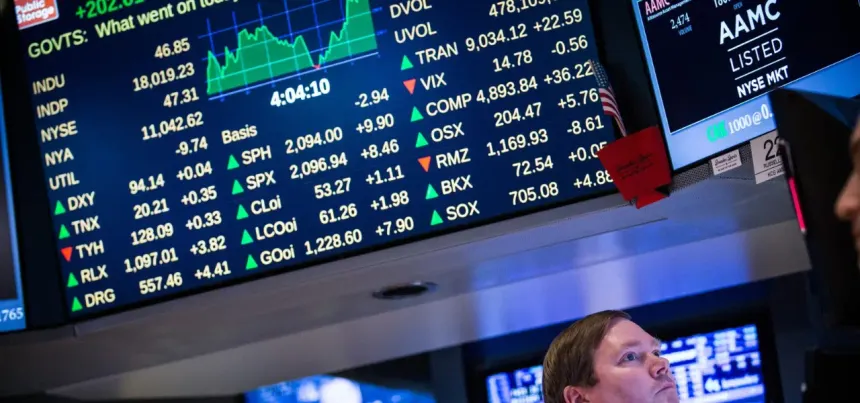
Holiday-shortened weeks typically lead to thinner trading volumes, which can sometimes amplify price swings due to reduced participation. On December 24, for instance, expect lighter activity as many institutional traders wind down their portfolios. This reduced liquidity can make it challenging to execute large orders at desired prices.
- Settlements: The T+1 settlement rule means trades executed on December 23 will settle on December 24. Trades on December 24 will settle on December 26, effectively bypassing Christmas Day.
- Brokerage Policies: Retail investors should always verify their brokerage's specific policies, as some platforms may restrict extended-hours trading during holidays or have different cut-off times.
- Bond Markets: Bond markets, governed by SIFMA, will also have adjusted hours, closing at 2:00 p.m. ET on December 24 and remaining shut on December 25, reopening normally on December 26. This divergence can impact fixed-income strategies tied to equities.
Global Market Considerations
While U.S. markets resume normal operations on December 26, many international exchanges will observe Boxing Day as a public holiday. This includes:
- London Stock Exchange (UK): Closed December 25-26.
- Toronto Stock Exchange (Canada): Closed December 25-26.
- Australian Securities Exchange: Closed December 25-26.
- Hong Kong Stock Exchange: Closed December 25-26.
This misalignment can lead to delayed reactions in U.S. markets to global news or economic data, especially in sectors with significant international exposure, such as commodities or technology. CME Group futures, including those for equities, will also operate on adjusted hours with halts around the Christmas holiday.
Historical Context and Broader 2025 Holiday Schedule
U.S. stock market holidays are standardized across major exchanges, rooted in federal observances and industry traditions. Christmas Eve early closures, for example, have a long history, designed to allow market participants to spend time with family while maintaining some market functionality. For 2025, the full list of U.S. market holidays includes:
| Holiday | Date in 2025 | Status |
|---|---|---|
| New Year's Day | January 1 (Wednesday) | Closed |
| Martin Luther King Jr. Day | January 20 (Monday) | Closed |
| Washington's Birthday/Presidents' Day | February 17 (Monday) | Closed |
| Good Friday | April 18 (Friday) | Closed |
| Memorial Day | May 26 (Monday) | Closed |
| Juneteenth National Independence Day | June 19 (Thursday) | Closed |
| Independence Day | July 4 (Friday) | Closed (Early close July 3 at 1:00 p.m. ET) |
| Labor Day | September 1 (Monday) | Closed |
| Thanksgiving Day | November 27 (Thursday) | Closed (Early close November 28 at 1:00 p.m. ET) |
| Christmas Day | December 25 (Thursday) | Closed (Early close December 24 at 1:00 p.m. ET) |
Economic and Strategic Insights
Holiday weeks often coincide with specific year-end market dynamics, such as portfolio rebalancing, tax-loss harvesting, and the potential for a 'Santa Claus Rally' – a historical uptrend observed from late December into early January. However, in 2025, with ongoing economic factors like interest rates, inflation, and geopolitical tensions, volatility could persist despite lighter volumes.
Investors are encouraged to use this period for careful review of their portfolios rather than aggressive trading. Leveraging tools like automated alerts can help stay informed of any significant market movements. For the most up-to-date information, always consult primary sources such as the NYSE's official calendar and the Nasdaq holiday schedule, as unforeseen events can occasionally lead to schedule adjustments.