Tesla's 2026 Crossroads: Navigating Innovation and Market Realities
As 2025 draws to a close, Tesla (TSLA) stands at a pivotal juncture, poised between groundbreaking technological advancements and intensifying market pressures. Our latest keyword analysis, current as of December 23, 2025, reveals a landscape of high public interest and significant investment opportunities, alongside notable risks that demand careful consideration from investors and industry observers alike. With a total monthly search volume of over 185,000 for key Tesla-related terms, the market is clearly scrutinizing every move.
The Autonomous Future: Robotaxi and FSD
The highly anticipated Robotaxi unveil event in December 2025 acted as a significant catalyst, driving a remarkable 28% surge in TSLA stock within just three days. Search interest for "Tesla Robotaxi" soared to 45,000 monthly searches, with "Cybercab Tesla" also attracting 12,000 searches, indicating immense public and investor curiosity. This enthusiasm is fueled by positive developments such as FSD (Full Self-Driving) version 12.5 achieving a reported five-fold improvement in intervention rates.
Analysts like ARK Invest project that autonomy could add over $1 trillion to Tesla's market capitalization, with millions of unsupervised FSD miles now logged. Furthermore, the Cybercab's projected sub-$30,000 price point and 20% margin forecast paint a bullish picture. However, the path to widespread deployment is not without hurdles. Concerns include potential regulatory delays extending into H2 2026, persistent technical challenges in complex edge cases, and growing competition from established players like Waymo and Uber. High capital expenditure requirements, estimated at over $10 billion, also pose a strain on free cash flow, and some bearish analysts felt the initial unveil "underwhelmed."
Powering Ahead: Tesla's Energy Segment
While the automotive sector garners much attention, Tesla's energy storage business is quietly becoming a powerhouse, offering a vital offset to potential EV sales slowdowns. Our analysis shows "Tesla energy storage" pulling in 29,000 monthly searches, and "Tesla Megapack" 11,000, reflecting growing interest in this segment.
The energy division demonstrated robust growth in Q3 2025, with deployments hitting 31.4 GWh—a 52% year-over-year increase. The Megapack backlog alone exceeds $15 billion, bolstered by the ramp-up of the Shanghai factory, and the segment boasts impressive gross margins of 30.5%, significantly outperforming the auto division's 17.1%. Powerwall sales also surged by 124% year-over-year. Yet, this growth isn't without its challenges: supply chain bottlenecks for Megapack deliveries, aggressive price competition from Chinese rivals, and rising raw material costs for LFP batteries are key concerns.
The Humanoid Vision: Optimus Robot
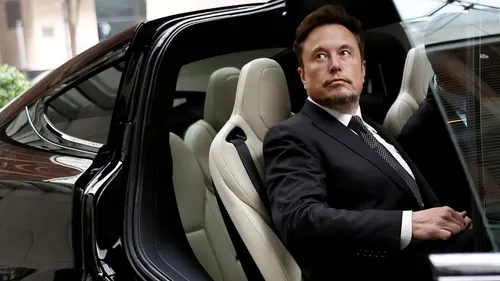
Tesla's ambitions extend beyond vehicles and energy into humanoid robotics with Optimus. The latest demonstrations, which saw Optimus v2 walking five times faster and handling heavy objects, have ignited considerable interest, evidenced by 24,000 monthly searches for "Tesla Optimus." Elon Musk himself has suggested Optimus could eventually be "bigger than the auto business."
With a target of deploying 1,000 units in factories by H1 2026 and a projected unit price of $20,000 yielding 70% margins, the commercial potential is vast. However, skepticism remains regarding the scalability of production beyond demo units, potential battery life and hardware limitations, and fierce competition from established robotics firms like Figure and Boston Dynamics. Ethical and regulatory concerns surrounding AI-powered robots are also on the rise.
Navigating Headwinds: EV Sales and Margin Pressures
Despite the excitement around new ventures, Tesla's core automotive business faces significant challenges. Keywords like "TSLA stock decline" (14,500 monthly searches) and "Tesla sales drop" (9,800 searches) highlight market anxieties. Q3 2025 saw a 6% year-over-year decline in deliveries, missing expectations, and China sales reportedly dropped 20% amidst intense competition from local manufacturers like BYD.
Gross margins have compressed to 19.8%, the lowest since 2022, primarily due to ongoing price wars that have eroded average selling prices. While the Model Y refresh has boosted demand in North America and Europe, and inventory levels have reduced, the broader EV market growth is slowing globally to an estimated 15%. This segment presents a low-difficulty SEO opportunity for articles focusing on risk assessment and contrarian views.
Investment Outlook and Key Takeaways for 2026
The investment landscape for TSLA in 2026 is complex and characterized by significant volatility. While some analysts have raised price targets to an average of $350 post-Robotaxi events, the stock's P/E ratio of 120x remains substantially higher than the sector average of 25x, indicating a premium for future growth potential. Key catalysts to watch include the upcoming Q4 2025 earnings report, with consensus EPS at $0.68 and projected record energy revenue of $3.5 billion.
Investors must weigh the potential for revolutionary growth in autonomy, energy, and robotics against the immediate pressures on automotive sales and profitability. Diversified exposure through ETFs like ARKQ or DRIV could offer a strategy to mitigate concentration risk while still benefiting from Tesla's long-term AI and robotics upside. As rising topics like "Cybercab," "FSD 12.5," and "Optimus v2" continue to dominate search trends, closely monitoring these areas will be crucial for understanding Tesla's trajectory into 2026.